

A Piece of IRON History: The Story Behind the LS 245 IRON Pump
Discover the story of the legendary and historical LS 245 IRON Pump, the early predessecor to the BDV-series, and it's lifetime throughout the 20th century and where it is today.
A Pump Born in a Time of Need
The story of this IRON pump begins during World War II, when Nybygning nr. 113, later known as the rescue vessel M/V Vestkysten, was ordered in 1942 and built at Nakskov Shipyard. The vessel was launched in 1944 and delivered in 1945 for service during a time when maritime operations were crucial for both safety and supply.
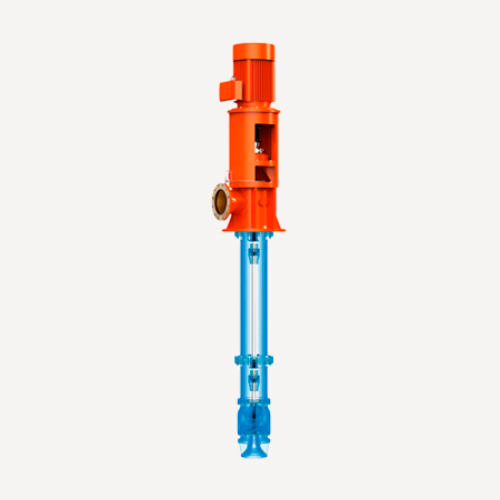
An IRON LS 245 pump was installed on board, which today can be regarded as an early predecessor of the later BDV pump series. From the very beginning, the pump formed a central part of the vessel's machinery, contributing to stable and reliable operation, qualities that were essential for a ship required to operate under demanding conditions at sea.
As the rescue vessel M/V Vestkysten, the ship was based in Thyborøn, from where it operated across a vast geographical area. It covered the entire North Sea region, from the Danish west coast to Greenland and the British Isles, carrying out a wide range of tasks.
Enduring Reliability in Changing Roles
Its primary role was that of a rescue vessel, but it was also used as a tugboat and, when conditions required, occasionally as an icebreaker. During this period, the vessel played an important role in saving lives and supporting maritime operations, often under harsh conditions.
Throughout this active service, from 1945 until 1987, when the vessel was retired as M/VVestkysten, the LS 245 IRON pump remained a reliable and integrated part of the machinery. Its long service life stands as a testament to the craftsmanship and quality that characterized the engineering solutions of that era.
After being withdrawn from rescue service, the vessel was renamed Gorm and given a new role as a guard and diving support vessel for a towing company. In this capacity, it continued its maritime service until 1994, when the engine was worn out and active operation came to an end.

A new chapter for the LS 245
Following this, yet another chapter in the vessel's life began. The ship later became known as Alba and was converted into a houseboat, moored at a quay and used as a residence. This transition from an active working vessel to civilian use was characteristic of many older vessels, but it also reflected the robust construction that made it possible to give the vessel a new lease of life.
In more recent years, the vessel has undergone another transformation and has been prepared for conversion into a pleasure craft. It was during this process that the pump, after nearly a lifetime on board, was removed.
At this stage, the story could have ended, but instead it took a new turn. A Bureau Veritas employee, Mr. Frost, became aware of the pump and its origins and contacted IRON.
This inquiry marked the beginning of the rediscovery of the pump's historical significance and its place in the company's history of development.
A Legacy Preserved
The pump's original nameplate still exists, while the original technical drawings have unfortunately been lost. This combination of preserved evidence and missing details highlights both the pump's age and the remarkable journey it has made, from wartime shipyard production to its rediscovery today.
Today, the pump stands not merely as a technical component, but as a tangible symbol of continuity and development. As an early predecessor of the BDV pump series, it represents an important step in IRON's technological evolution and bears witness to an approach in which quality, durability, and functionality have remained central priorities across generations.


Product section


Get in touch today
Have a question or need guidance on our pump solutions? Reach out and our team will get back to you as soon as possible.